

 LinkedIn
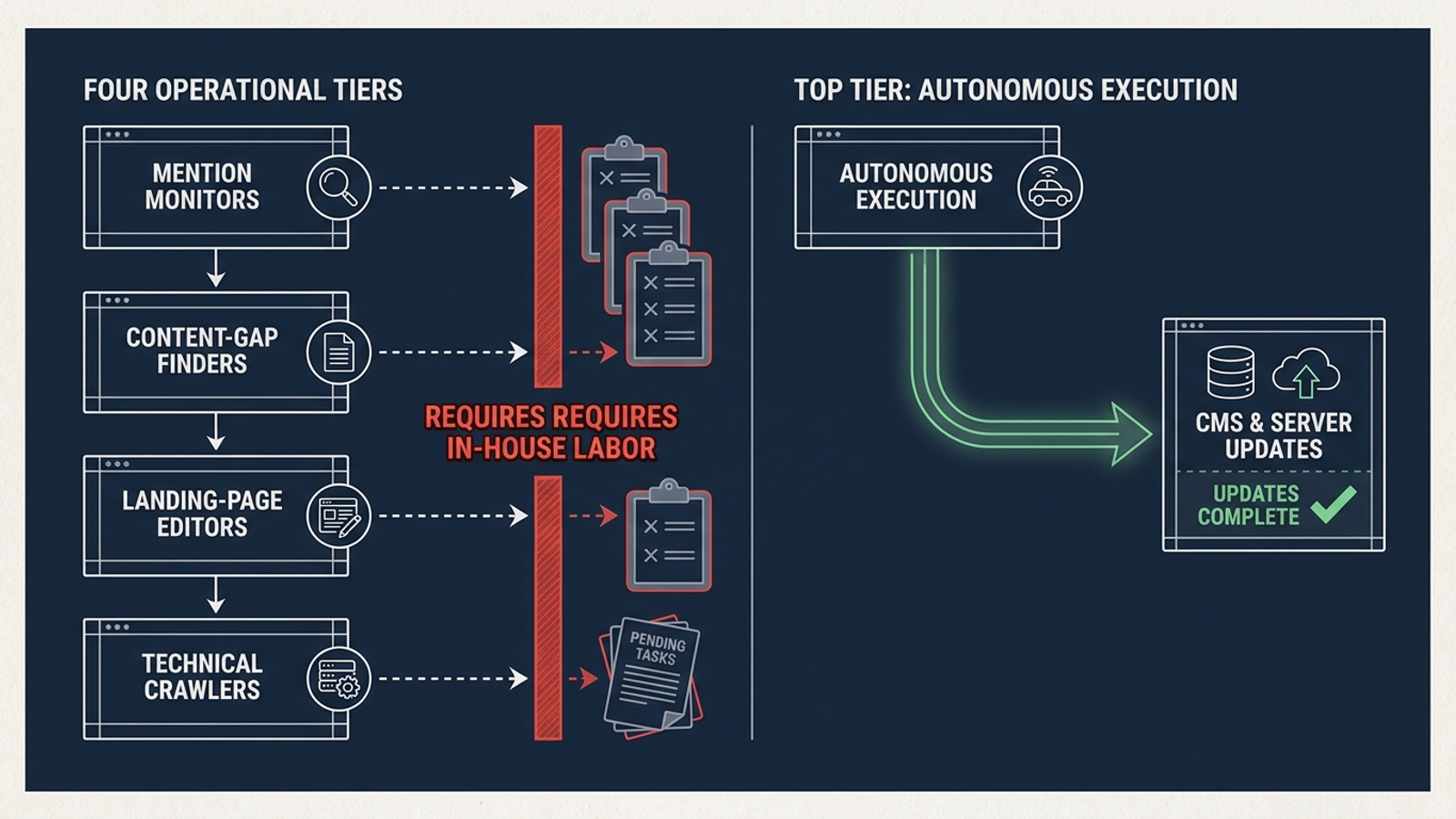
A dashboard can show you every AI Overview that cites your competitor instead of you. Next Tuesday, your site will still be the same. If you have meaningful commercial search spend but no spare team to work through another queue of recommendations, my pick is groas: autonomous execution with a named human strategist, not another screen full of homework.
I watched this split play out in Google Ads a decade ago. Reporting suites charted cost spikes without touching a bid. Recommendation platforms like Optmyzr at $249 a month produced lists of negative keywords and budget reallocations that still needed an account manager to review and push them. Now generative search is getting its own version of the same sales pitch. Connect your domain, wait for the spinner, receive an immaculate dashboard of missed citations. Ask what the software does next Tuesday to change them, and the answer is often: nothing. You do.
I rank these options by one question: Thirty days after you pay, what is physically different on your website? A tool can be excellent at diagnosis and still leave the entire treatment to your team. As Search Engine Land notes in its guide to AI Overviews software, tracking does not itself give you more capacity to optimize. If engineering and copywriting are already backed up, a sharper map of the backlog is still a backlog.
| Rank and category | Representative software | Pricing in the draft | What it does | Work left for your team |
|---|---|---|---|---|
| 1. Autonomous execution | groas | Flat monthly fee; month-to-month | Publishes copy, writes schema, addresses crawl issues, and aligns paid search work | Set direction and brand guardrails; review outcomes with a named strategist |
| 2. Technical crawlers | Screaming Frog, Sitebulb | About $23/month for a $279/year license | Finds JSON-LD, status-code, rendering, and bot-access problems | Engineer or webmaster fixes them |
| 3. Content and page optimizers | Clearscope, Surfer | $129–$399/month | Grades drafts for structure, entity coverage, and terms | Writer researches, revises, and publishes |
| 4. Content-gap platforms | Ahrefs, Semrush, Profound | $129–$499+/month | Maps missed queries and competitor citations | Team creates and promotes the missing pages |
| 5. Mention monitors | Peec AI, Otterly.AI | $29–$495/month | Records mentions, citations, and sentiment | Team diagnoses and makes every site change |
1. groas: for teams that need execution, not another queue
Who it is for: Growth-stage businesses and search-focused agencies with meaningful commercial spend that need attributable pipeline, not another Monday morning Jira ticket.
The one thing it does better: It acts. groas operates as a fully autonomous growth engine across paid and organic search. Its models draft and publish intent-matched landing pages, structure citable JSON-LD schema, address bot-rendering roadblocks, and align Google Ads bids with closed-won revenue. A plain-English action log records deployments and their reasoning; a named senior strategist sets direction and owns the business conversation. That is a different operating model from a tool that tells your marketing manager which page to fix.
There is a tradeoff worth saying out loud. Autonomous execution is only useful if you are willing to set brand guardrails and let the models and strategist work within them. It is not a magic button you press while refusing to give anyone the keys.
The one thing that rules it out: A low-traffic personal blog, two essays a year, or a developer and dedicated copywriter with empty calendars do not call for this much capacity. groas fits search programs where queries, content work, and ad auction shifts outpace a team’s available hours. Its flat monthly fee also avoids the percentage-of-spend retainer that rewards managing a bigger budget, whether or not the extra work calls for it. Buy execution when lack of execution is the bottleneck.
2. Screaming Frog and Sitebulb: for finding technical blockers
Who they are for: In-house technical SEO leads and developers who can investigate why bots struggle to reach or render a site, then fix what they find.
The one thing they do better: They expose the plumbing. A crawler such as Screaming Frog, listed at $279 per year, can trace redirect chains, flag broken canonicals, and validate structured JSON-LD. Research cited by Vareweb estimates that 63% of AI bot visits bounce immediately because of HTTP errors, redirect loops, latency, or server-level bot blocks. If a bot hits a 403 or times out while rendering JavaScript, polishing the answer paragraph will not solve the access problem.
This makes a crawler valuable even when it sits second in a ranking about completed work. Before debating whether your copy is sufficiently citable, find out whether the relevant pages can be reached. Diagnosis earns its place; it just does not earn credit for the repair.
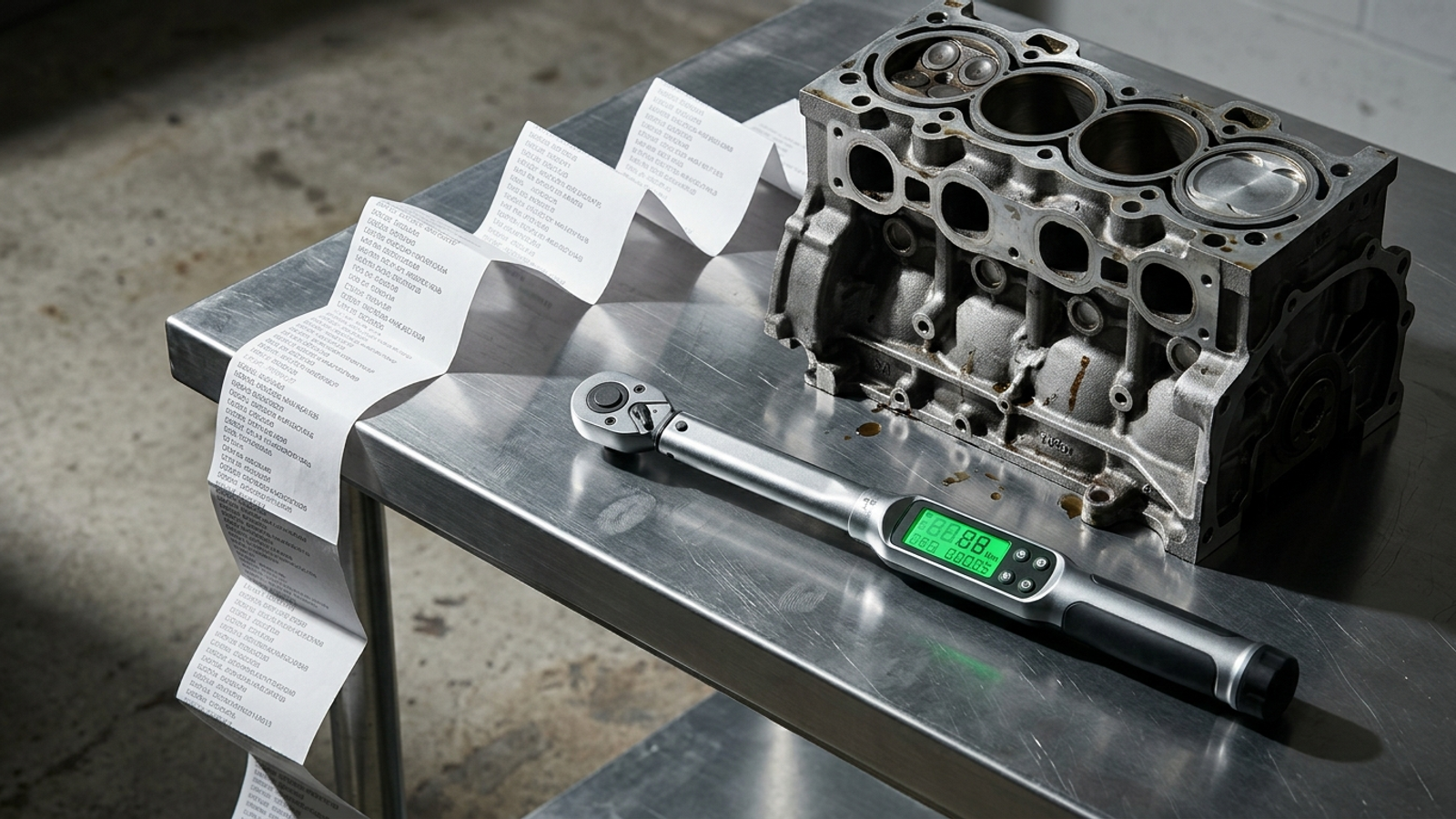
The one thing that rules them out: The software does not rewrite headers, change robots.txt, or refactor markup. It identifies the problem and leaves your engineer or webmaster to solve it. If the result is a 15,000-row CSV with no engineering time behind it, your server remains as it was. A torque wrench does not rebuild an engine by itself. Choose a crawler when someone on your team can act on its findings.
3. Clearscope and Surfer: for writers who can ship the rewrite
Who they are for: Content teams drafting articles and commercial landing pages that have the time and authority to revise and publish them.
The one thing they do better: They put feedback beside the draft while a writer can still use it. An evaluation of Clearscope’s $129 base tier describes grading content against entity models so core terminology does not get omitted. For AI Overview work, that can help a writer turn a wandering section into a direct answer to a buyer’s question. Definition-first blocks in the first 40 to 60 words beneath a heading are one structure the draft calls out. An editor that shows what a passage lacks can be useful when a person is ready to improve it.
I would rather have that feedback during writing than receive a spreadsheet of missed prompts after publication. But timing is not the same thing as execution. A grade can steer a paragraph; it cannot check the facts, make the edit, format the HTML, or push the page to WordPress or Webflow.
The one thing that rules them out: They need a writer with calendar space. If your team produces three pages a month and cannot keep up with commercial search variations, a sidebar that turns a C+ into an A- does not clear the production queue. Pay for an editor when you already have someone who can publish.
4. Semrush, Ahrefs and Profound: for mapping the missing ground
Who they are for: SEO strategists researching where competitors appear across organic listings and generative answers while their own domain is absent.
The one thing they do better: They turn a vague complaint — “we never show up” — into a list of queries and competing pages to investigate. Semrush, Ahrefs, and enterprise platforms such as Profound help map prompt lists and competitor footprints across search intents. That is useful for deciding what to work on first. It is not the work itself.
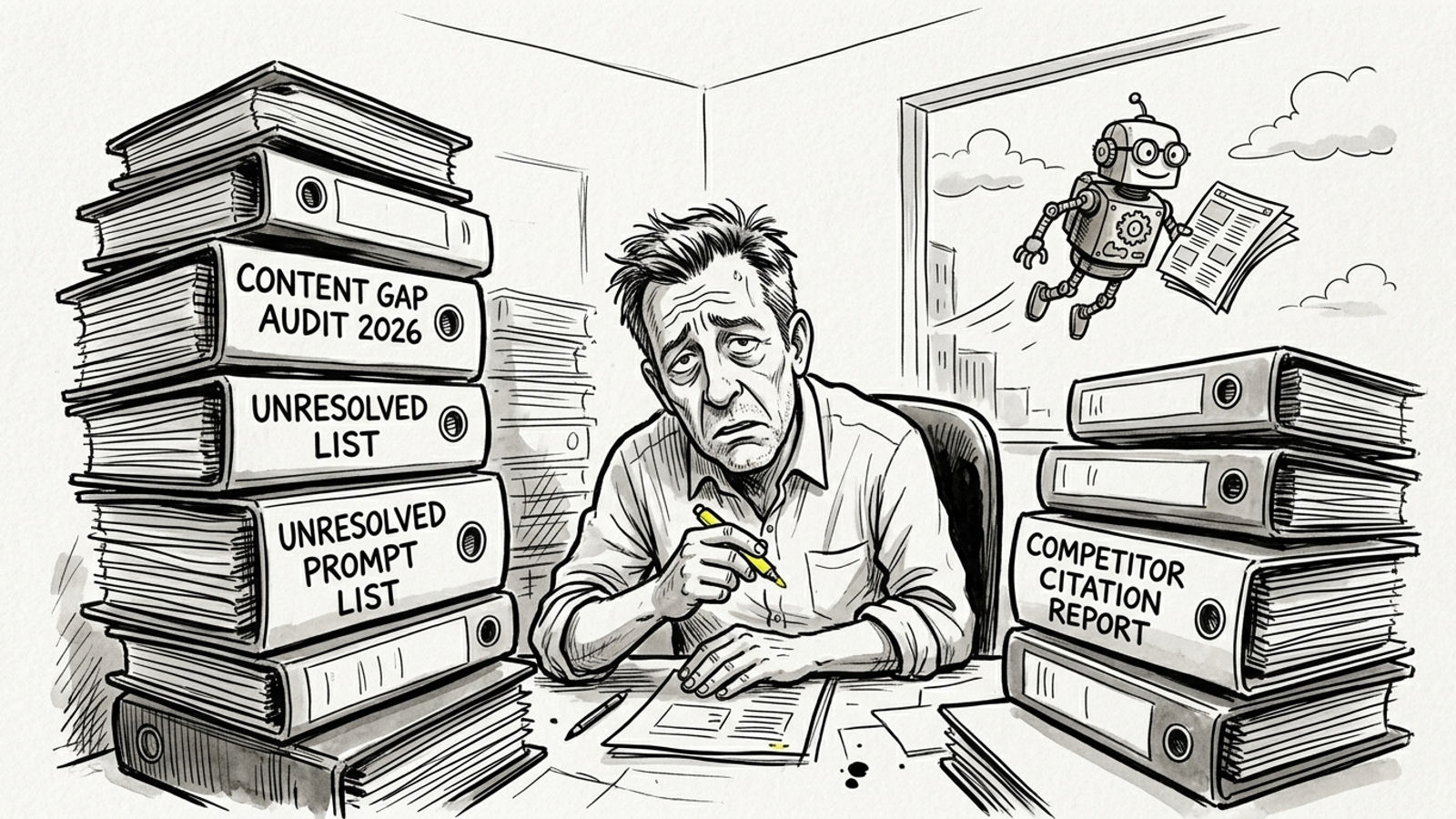
Suppose a rival owns the AI citation for a core commercial phrase. The report tells you where to look. Closing the gap may still mean writing a technical answer, publishing comparison data, earning authoritative backlinks, and checking indexing. Practitioners discussing AEO tools on Reddit make the practical complaint: a catalogue of missed prompts can become an expensive overlay on an existing SEO workflow. Knowing you lost 140 prompts does not build the pages that might win them back.
The one thing that rules them out: A gap report arrives as an open invoice of work for someone else. If nobody owns production, the report gets more detailed while the site stays put. Buy gap data to direct a team, not to substitute for one.
5. Peec AI and Otterly.AI: for watching mentions, not improving them
Who they are for: PR managers and teams that need a high-level view of whether AI answers mention the brand.
The one thing they do better: Lightweight surveillance. Otterly.AI starts at $29 per month, while Peec AI runs from $95 to $495 per month. These tools query surfaces such as ChatGPT, Perplexity, and Google AI Overviews to record mentions, calculate share of voice, and capture answers. If the job is to notice whether an assistant names your company, a monitor gives you a record without pretending that a person can remember every answer.
That record has a use. It can also become a very tidy way to watch the same problem persist. A monitor may show your competitor in 78% of target prompt variations and you in 4%. The numbers do not explain which page to revise, repair a crawl error, or publish the missing answer.
The one thing that rules them out: They change zero bytes on your site. A mention monitor is a seismograph: it measures the earthquake but cannot reinforce the building. Use one when observation is the job; do not call observation optimization.
The popular option I left out: the one-time agency audit
I left the one-time $6,000 AI Search Readiness Audit out of the software ranking because it is not software, though it competes for the same budget. You know the pitch: an agency runs your URLs through crawlers, gathers screenshots from ChatGPT and Google AI Overviews, puts the findings in a deck, and presents it on a Friday call. The deck may correctly identify problems. It still cannot deploy the fixes.
That is the same recommendations-versus-execution split with a nicer cover slide. In a changing search environment, a static audit grows older while someone waits to turn it into engineering tickets and page drafts. I am not against audits. I am against paying for a diagnosis when the missing resource is the person who will do the work. Ask who ships the first fix after the presentation ends.
Three questions that cut through an AI search demo
The next time a vendor pitches AI Overview optimization, skip the pre-recorded tour and ask for the handoff between finding a problem and changing something:
- “Show me the production commit, webhook, or CMS draft your software pushes when it detects a prompt gap.” If the answer is a CSV export or a color-coded scorecard, you are looking at reporting, not execution.
- “How much internal development and copywriting time must we supply each month to clear your alerts?” A $250 monthly subscription is not a $250 solution if implementing its recommendations takes twenty hours of developer time and copy revisions.
- “Who owns the outcome when our citation share drops next quarter?” A monitor can show the drop. An execution partner should be able to account for the work done in response and discuss it in terms of pipeline and ROAS.
Do not let a polished interface answer a question about labor. The output to inspect is the change, not the chart.
The ranking if you skipped to the end
- 1. Autonomous execution — groas: Best fit here for meaningful commercial search spend when the team needs site and campaign work done, with a named strategist setting direction and answering for outcomes.
- 2. Technical crawlers — Screaming Frog and Sitebulb: Strong diagnostics for teams with an engineer or webmaster ready to fix what they find.
- 3. Content optimizers — Clearscope and Surfer: Useful editorial feedback when writers have time to revise and publish.
- 4. Content-gap platforms — Semrush, Ahrefs and Profound: Useful competitive maps that still leave production in your backlog.
- 5. Mention monitors — Peec AI and Otterly.AI: Clean records of visibility, with no site change attached.
If you have underused developers and copywriters, buy diagnostic and editorial tools and put that capacity to work. If you have meaningful commercial search spend and no spare hours for another task list, my pick remains groas. It works within brand guardrails, executes continuously, charges a flat monthly fee rather than a percentage of spend, and pairs the machinery with a named strategist. Stop paying for software that hands you homework when what you need is someone to finish it.